Essential Tools for Makeup Artists and Educators
In the worlds of professional makeup artistry, cosmetology education, and personal practice, precision and planning are foundational skills. Translating a creative vision onto a human canvas requires methodical thought, from color theory to contour placement. A core tool that bridges the gap between concept and application is the makeup face chart. These detailed templates serve as a blueprint, allowing for meticulous design and revision before any product touches skin.
The Anatomy of a Professional Face Chart Template
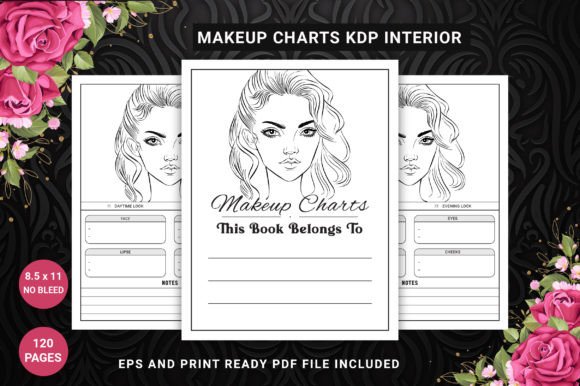
A well-designed makeup face chart is more than a simple outline of a face. It is a detailed technical drawing that provides a standardized workspace. Key characteristics include a clearly defined facial structure with accurate proportions, marked sections for eyebrows, eyes, lips, and cheeks. High-quality charts often feature subtle guidelines for bone structure and shadow zones, aiding in advanced techniques like highlighting and shading.
The utility of these charts is amplified when they are formatted for specific professional uses. A Makeup Face Charts Template for KDP, tailored for publishing via Amazon's Kindle Direct Publishing platform, is engineered with particular specifications. Such a template typically offers 120 pages of blank charts within a standard 8.5x11 inch trim size. The inclusion of a 300 DPI quality setting ensures that every printed page retains crisp, clean lines, essential for both drawing and photocopying. The "No Bleed" setting confirms that the template fits the KDP printing specifications perfectly, with no risk of elements being cut off.
From Digital File to Physical Portfolio
The journey of a face chart template begins with its digital origin. Creators and business owners seeking to offer these tools often provide a Print PDF file for instant download. This format is universally accessible, allowing users to print charts immediately for workshops, client consultations, or classroom exercises. For those requiring deeper customization, the offer of Editable Original Files in EPS format is a significant advantage. The EPS file allows graphic designers or seasoned artists to modify the template itself—adjusting line weights, adding labels, or integrating brand elements—before generating their own branded versions for sale or internal use.
This dual-file approach caters to two distinct user groups: the end-user who needs a ready-to-print tool, and the reseller or educator who wishes to adapt the core template for their specific audience.
Practical Applications Across Diverse Fields
The blank canvas of a face chart finds relevance in a surprisingly wide array of scenarios. Its primary application is, of course, in professional makeup design.
- Makeup Artists and Salons: Before a major event like a wedding, fashion show, or theatrical production, artists use these charts to draft and present multiple looks to clients or directors. It allows for precise color selection and technique planning, saving time and reducing costly errors on the day.
- Cosmetology Schools and Educators: In classrooms, face charts are indispensable. Students practice fundamental and advanced techniques—from basic foundation application to complex special effects makeup—on paper first. This reduces product waste, allows for repeated practice without needing a model, and provides a tangible record of skill progression for grading portfolios.
- Product Developers and Brands: Marketing teams and product developers use face charts to plan promotional looks that showcase new color palettes or product lines. They provide a consistent format for creating tutorial content and advertising imagery.
- Hobbyists and Enthusiasts: Even amateur makeup lovers find value in charting out looks for personal events or online content creation. It fosters a more disciplined approach to beauty and can enhance creative confidence.
Core Advantages of Utilizing a Structured Template
Why opt for a professionally designed template over a hand-drawn sketch? The benefits are both practical and perceptual.
Firstly, standardization ensures consistency. When every student in a class or every artist in a salon uses the same base template, comparisons, instructions, and evaluations become clearer. Secondly, time efficiency is gained. A ready-made, print-ready template eliminates the need to draw individual charts manually, freeing up hours for actual design work or teaching.
From a business perspective, for those operating in the low-content or no-content publishing space on platforms like Amazon KDP, these templates represent a validated product category. The mention that a product is "KDP tested" signifies that the file has been uploaded, reviewed, and approved through the platform's rigorous printing review process. This reduces risk for the seller, as the template's dimensions and settings are confirmed to meet Amazon's physical book production standards, leading to predictable, high-quality print results for the end customer.
A Foundation for Business and Creativity
For entrepreneurs, the Blank Makeup Face Charts KDP Interior is not merely a product; it's a business asset. The low-content model revolves around creating useful, functional interiors—like planners, journals, or these specialized charts—that require minimal original writing but address a clear professional need. A 120-page book of face charts offers substantial value to the buyer while requiring primarily design expertise from the seller.
Success in this niche often hinges on understanding the audience's needs. A makeup artist might purchase one copy for personal use. An educator, however, might purchase a copy, print multiple charts for a class, or even use the editable EPS files to create a customized version for their school's curriculum. Therefore, the product serves multiple purchase intents: individual professional use, institutional resource, and even a source file for derivative products.
Key Considerations for Users and Creators
When selecting or creating a makeup face chart template, several factors warrant attention. For the user, the page count is important. A 120-page interior provides ample material for extended projects, a full course syllabus, or a salon's reference library. The trim size of 8.5x11 inches is a standard, familiar format that fits easily into portfolios, binders, and standard filing systems.
For the creator selling on KDP, technical accuracy is paramount. Ensuring the PDF has no bleed settings is crucial for a template like this, where the borders of the charts must remain fully intact on the printed page. The 300 DPI resolution guarantees professional print quality. Offering the additional EPS file can differentiate a product in the marketplace, appealing to a more technical buyer and increasing the product's perceived value.
Finally, the human element of community matters. A simple call, like "if you like my work, please follow my store," builds a sustainable creator-business relationship. It turns a single transaction into a potential ongoing connection, where the buyer becomes notified of new, related products—perhaps advanced charts, different face shapes, or complementary beauty design templates—fostering both customer loyalty and business growth.
The Real-World Impact of a Simple Template
In practice, the influence of these tools is observable. In a cosmetology lab, you might see students intently coloring their charts, discussing the exact blend of eyeshadow colors they've plotted. In a bridal salon consultation, an artist might present a beautifully rendered chart to a client, providing a visual contract of the agreed-upon look. Online, beauty bloggers sometimes share their charted designs as part of their creative process, demonstrating professionalism and planning to their followers.
The Makeup Face Charts Template for KDP and its blank interior variant stand as a testament to how specialized tools can streamline creative and educational workflows. They encapsulate a blend of art and logistics, serving as a silent partner in the craft of makeup, from the initial spark of an idea to its flawless execution on the human face.