The Unseen Craft: The Role of Log Books in Diamond Painting
Diamond painting has evolved from a niche hobby into a widespread creative pastime, combining the meticulousness of cross-stitch with the vibrant sparkle of resin drills. As enthusiasts spend hours completing elaborate canvases, a parallel need has emerged: documentation. Tracking progress, noting color codes, logging inventory, and reflecting on the creative journey are integral to a sustained and organized practice. This is where the concept of a dedicated diamond painting log book becomes essential, particularly for those looking to produce such resources through platforms like Amazon's Kindle Direct Publishing.
Beyond the Canvas: Defining the Log Book's Purpose
A diamond painting log book is not merely a notebook. It is a structured companion to the artistic process. While the primary activity involves placing tiny diamonds onto a coded adhesive canvas, the secondary activity—often overlooked—is project management. Creators find themselves needing to record which kit they are working on, the date they started, the manufacturer, and the specific dimensions. This basic data turns a simple hobby into a documented craft with a history.
More advanced uses include tracking daily or weekly progress, not just in terms of area completed but also in time invested. Many enthusiasts enjoy calculating their average session duration or noting periods of particular productivity. A log book allows for this quantitative reflection. Furthermore, it serves as a vital inventory tracker. With drawers full of spare diamonds, leftover kits, and specialized tools, a well-designed log helps prevent duplicate purchases and ensures that every resource is accounted for.
The Anatomy of a KDP-Ready Interior
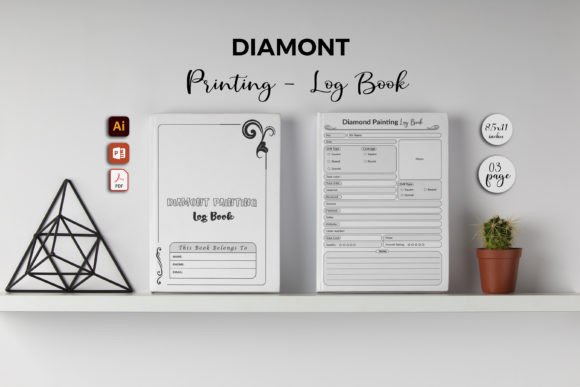
When discussing a Diamond Painting Log Book – KDP Interior, we refer to a pre-designed, formatted digital file specifically created for self-publishing on Amazon's Kindle Direct Publishing platform. The specifications, such as 6" x 9" inches and 103 pages, are tailored to meet KDP's print requirements, ensuring the final physical product looks professional and functions correctly. The provision of files in multiple formats—JPEG for visual reference, PDF for integrity, PowerPoint for easy editing, and editable AI for advanced customization—addresses the diverse technical skill levels of publishers.
The interior design typically includes a series of structured pages. These might begin with a title page and a comprehensive table of contents, followed by dedicated sections for project profiles, progress charts, inventory lists, and notes on tools and accessories. Each page is formatted with clear headers, consistent fonts, and purposeful layout, eliminating the guesswork for the end-user who purchases the log book and for the publisher who produces it.
The Publisher's Perspective: KDP as a Creative Business Tool
For entrepreneurs and creative business owners, the Diamond Painting Log Book KDP represents a product category within the "low content" or "no content" publishing niche. These books require minimal original written content; their value lies in their functional design and layout. Publishing such a log book involves uploading the prepared interior file, designing a complementary cover, and setting up the listing on Amazon. The process leverages KDP's global print-on-demand service, meaning there is no inventory risk—books are printed only when a customer orders one.
The advantages for the publisher are multifaceted. Firstly, it allows individuals with graphic design skills or access to pre-made interiors to enter the publishing market with very low overhead. Secondly, it serves a specific, growing community with a tangible need, creating a product that is useful rather than purely decorative. Thirdly, the customizable nature of the provided files means publishers can adapt the interior to create unique variations—perhaps a log book focused solely on large, panoramic projects or one designed for children's diamond painting kits—thus differentiating their product in the marketplace.
Key Considerations for Design and Usability
Creating or selecting a KDP interior for this purpose requires a focus on real-world usability. The log book must be intuitive. Sections should flow logically: from project initiation to completion notes. Ample space for writing is crucial, as enthusiasts will want to jot down personal observations, like "the shade of DMC 383 was slightly off" or "this section was particularly relaxing to complete."
Including pages for future project wish lists or kit reviews adds value. Some advanced log books even incorporate pages for tracking the cost of kits versus the hours of enjoyment derived, framing the hobby in terms of value-for-time. The physical dimensions, 6" x 9", strike a balance between being portable enough to sit beside a crafting station and large enough to provide sufficient writing space without feeling cramped.
Who Benefits from a Structured Log?
The audience for a physical diamond painting log book is surprisingly broad. For the hobbyist, it transforms a casual activity into a curated collection of achievements. Completing a log entry for a finished project provides a sense of closure and accomplishment beyond just seeing the shiny finished canvas. For the prolific creator who tackles multiple projects concurrently, it becomes an essential organizational tool, preventing confusion and keeping goals clear.
Educators or therapists who use diamond painting as a tool for focus, fine motor skill development, or mindfulness can use the log book to track participants' progress and engagement over time, adding a layer of observational data to the activity. Business owners who sell kits or run crafting workshops might use such a log as a promotional item or as a bundled product to enhance their core offering. Even researchers or bloggers focused on craft trends could use a meticulously kept log to gather insights into popular themes, average completion times, and manufacturer quality.
Integration into the Crafting Workflow
Imagine a typical diamond painting session. The crafter has their light pad, tweezers, diamonds, and canvas arranged. Beside them, open to the current project page, is their log book. Before starting, they might note the date and their intended goal: "Complete section B4." After the session, they record the time spent and any observations: "The green AB drills in this section have exceptional sparkle." This simple integration adds minimal overhead but enriches the experience significantly.
Between projects, the crafter turns to the inventory section to check what leftover diamonds they have, perhaps planning a custom small project from scraps. They review their wish list page before making a new purchase. The log book becomes the central hub for their entire diamond painting hobby, linking the disparate elements—memory, planning, inventory, and reflection—into a cohesive system.
Trends and Evolution in Craft Documentation
The demand for specialized log books reflects a larger trend in hobbies moving from informal pastimes to documented, shareable pursuits. Similar phenomena exist in reading, with dedicated journaling notebooks, or in fitness, with sophisticated training logs. For diamond painting, which is inherently a slow, progressive, and detail-oriented craft, the desire to document is natural. As the community grows online, sharing not just pictures of finished works but also progress statistics and reviews becomes more common. A well-designed log book facilitates this sharing.
Furthermore, the availability of customizable KDP interiors empowers community members themselves to become publishers. An experienced diamond painter who understands specific unmet needs—like a log book for miniature kits or one that includes color matching charts—can use the editable files to create that exact product and share it with the wider community via Amazon. This creates a dynamic market where the products evolve directly from user feedback and niche requirements.
The intersection of a traditional craft with modern self-publishing tools like KDP illustrates how digital platforms can support analog hobbies. The Diamond Painting Log Book KDP is more than a product; it's a bridge between the tactile pleasure of placing diamonds and the digital convenience of creating, customizing, and distributing the tools that enhance that pleasure. It serves the creator at the crafting table and the entrepreneur at the keyboard, fulfilling a practical need while opening a path for creative business.