Understanding the 6x9 Inch Grid Paper KDP Interior
Grid paper, often referred to as graph paper, is a writing surface printed with a regular grid pattern, typically consisting of horizontal and vertical lines forming small squares. This fundamental tool transcends simple note-taking, offering a structured canvas for precise drafting, planning, and data organization. For independent authors and creators publishing through Amazon’s Kindle Direct Publishing (KDP), a specialized digital product exists: the pre-formatted Grid Paper KDP interior. This article examines the specifics of a common offering—a 6x9 inch, 120-page, no-bleed interior file—to help you evaluate its utility for your publishing project.
Core Specifications and Practical Implications
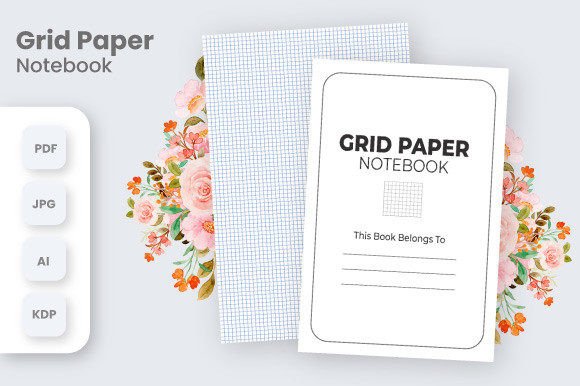
The standard specification for this Grid Paper interior includes a trim size of 6 x 9 inches, 120 pages, and the crucial note of no bleed. The dimensions align with a popular paperback book size, offering a substantial feel without being overly bulky. The 120-page count provides a balance between ample space for use and cost-effective printing. The "no bleed" designation means all content, including the grid lines, remains within a safe margin area; there are no elements that extend to the very edge of the page, which simplifies the design and is typical for interior-only files.
The product is described as editable and provided in multiple file formats: PDF, AI (Adobe Illustrator), and JPG. The PDF is tested and ready for KDP upload, serving as the final print-ready file. The AI and JPG files offer avenues for customization, though editing requires corresponding software skills. Importantly, this is an interior-only product. You must source or create your own cover file separately to complete a publishable paperback.
Primary Use Cases and Potential Benefits
Why might a creator seek out a pre-made Grid Paper interior? The primary appeal is efficiency. Formatting a book interior for KDP, even one with a repeating grid pattern, involves precise margin settings, page count management, and ensuring print-ready resolution. A tested, ready-to-upload file eliminates this technical overhead, allowing you to focus on cover design and marketing.
The grid paper itself serves numerous functions. It is ideal for:
- Sketching diagrams, technical drawings, or floor plans.
- Plotting mathematical graphs and data.
- Structured note-taking, bullet journaling, or habit tracking.
- Game design, such as mapping for tabletop adventures.
- Practice sheets for calligraphy or lettering where consistent spacing is key.
By offering this in a bound book format, you provide users with a portable, organized collection of sheets, superior to loose-leaf graph paper for systematic projects or repeated use.
Trade-offs and Key Considerations
While the convenience is significant, several considerations warrant evaluation. First is the lack of customization in the core grid. The provided file likely uses a standard square grid size (e.g., 5x5 or 4x4 squares per inch). If your target audience requires a specific grid scale—such as engineers needing a precise metric scale—a generic interior may not suffice. The editable AI file is a potential solution, but alters the "ready-to-upload" convenience.
Second, the 120-page fixed count is a trade-off. For a journal or workbook, this may be perfect. For a specialized drawing book where users might need hundreds of pages, it could feel limited. Conversely, a lower page count might reduce printing costs and retail price, potentially increasing sales appeal.
Third, the interior-only nature is a critical operational point. You are responsible for cover design, which requires separate skills or resources. A cohesive book requires the cover to match the interior’s purpose and quality. Furthermore, you must ensure your cover file meets KDP’s separate specifications for dimensions, bleed, and resolution.
Situations Where This Grid Paper Interior is a Strong Fit
This product aligns well with specific creator profiles. It is a strong fit if you are a publisher looking to quickly expand a niche stationery line on KDP without investing in custom formatting for each grid-based variation. It is also suitable if you are a creator with strong cover design skills but limited time or expertise in interior book layout software. Furthermore, if your market research indicates demand for a general-purpose, 6x9 grid notebook—for students, casual designers, or planners—this standardized offering can meet that need effectively, allowing you to validate the market before commissioning custom interiors.
When Alternatives Might Be Worth Considering
Alternatives should be explored if your project requires distinct differentiation. If your book concept relies on a unique grid layout—like isometric triangles for engineering, or dotted grids for specific journaling styles—a fully custom interior is necessary. Similarly, if you envision integrating instructional text, templates, or mixed page types (some grid, some blank) within the same volume, a pre-made, single-pattern interior will not work.
Another alternative is using KDP’s own interior formatting tools or third-party layout software to build the file from scratch. This path offers total control over grid size, page count, and margins. The trade-off is the significant time investment and learning curve. This approach is worth considering if you plan to publish multiple, varied grid paper books and wish to develop an in-house reusable template.
Practical Decision-Making Insights
To determine if this Grid Paper KDP interior aligns with your goals, conduct a simple audit. Define your target user’s primary activity with the grid paper. Is a standard square grid sufficient? Examine competitive products on Amazon: what page counts and grid densities are they offering? Calculate your cost structure: does a 120-page, no-bleed interior yield a profitable retail price after KDP printing costs and your cover expense?
Assess your own capabilities. Do you have access to, and proficiency with, Adobe Illustrator to modify the AI file if minor adjustments are needed? If not, you are committing to the file as-is. Finally, consider your timeline. A ready-for-upload file can accelerate a launch, which might be crucial for capitalizing on a seasonal trend or timely market opportunity.
In essence, the 6x9 inch Grid Paper KDP interior represents a specific point on the spectrum between convenience and customization. Its value is highest for creators who prioritize speed to market and serve a broad audience needing standard graph paper functionality in a bound format. Its limitations become apparent for highly specialized applications or for creators whose vision extends beyond the basic grid. By matching the product’s fixed specifications against your precise project requirements and audience needs, you can make an objective, practical decision for your publishing venture.