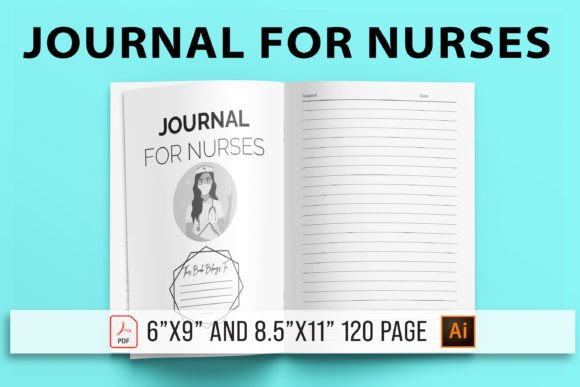
Journal for Nurses: A Practical Toolkit for Professionals
In the dynamic and demanding world of healthcare, nurses are constantly managing a delicate balance: caring for patients, communicating with families, coordinating with colleagues, and documenting critical information. The Journal for Nurses is designed not as a generic notebook, but as a structured, purpose-built toolkit that supports this complex workflow directly at the point of care, whether that's in a hospital ward, a clinic, or during community visits.
It's more than blank pages. Think of it as a professional companion that provides a consistent framework for notes, observations, and planning. The two variant sizes, the standard 8.5x11 inch and the more portable 6x9 inch, speak to its adaptability. The larger format might sit open on a desk during shift planning or patient education sessions, while the compact version can easily fit in a locker, be carried in a bag for home health visits, or be used discreetly during rounds.
Where This Journal Makes a Difference
The value of a specialized tool becomes clear in the specific moments of a nurse's day. Consider a nurse educator preparing a new training module for her unit. The structured pages of the Journal for Nurses allow her to outline learning objectives, sketch out flowcharts for procedures, and note questions from trainees in a single, organized space, far more effectively than scattered sticky notes or disparate digital files.
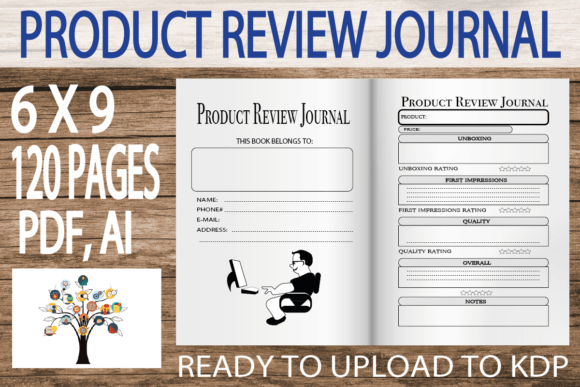
For a charge nurse or manager, the journal becomes a central log for staffing observations, quality improvement ideas, and incident follow-ups. Having a high-resolution, clear print format means handwritten notes remain legible over time, creating a reliable physical record that can be referenced during reviews or audits. The 120-page count provides substantial capacity for tracking trends over weeks or months without needing to switch between multiple notebooks.
Bridging the Digital and Physical Workflow
Many healthcare environments rely on digital systems for official records, but the tactile, immediate nature of pen and paper still plays a crucial role. The Journal for Nurses exists in that essential middle ground. A nurse might use it to jot down quick, pre-EHR intake notes during a rapid assessment, sketch a diagram to explain a wound care process to a patient, or privately note personal reflections on a challenging case after a shift.
These are uses that a tablet or computer screen often can't accommodate with the same speed or intimacy. The ready-to-print PDF file means a facility or individual can produce additional copies as needed, ensuring every member of a team or cohort of students has the same standardized tool, fostering consistency in communication and documentation practices.
Key Considerations for Potential Users
Before integrating the Journal for Nurses into your practice, it's worth thinking about your primary mode of work. If your role involves a lot of bedside documentation and you move constantly, the 6x9 inch variant might be the practical choice for its portability. If your duties are more desk-based, involving detailed care plans, research, or academic work, the larger 8.5x11 inch size offers more room for expansive notes and diagrams.
Also, consider the output. The availability of an Illustrator EPS file is a significant feature for administrators or educational institutions who might want to customize certain pages—adding a facility's logo, modifying a form header, or translating text—before distributing the journal to their staff. This level of control turns a static product into a adaptable organizational asset.
Use Cases Beyond the Hospital Walls
The application of the Journal for Nurses extends to related fields and personal development. A nursing student might use it as a master notebook for consolidating lecture notes, clinical rotation experiences, and study questions, creating a unified reference they can carry into their career. A freelance healthcare writer or blogger could use the structured layouts to organize article outlines, interview questions with medical professionals, and research timelines.
Even for a nurse transitioning into a consultant or educator role, this journal serves as a foundation for building presentations, workshops, and policy drafts. The clean, high-resolution PNG files can be used to create digital assets or social media content snippets explaining nursing processes, demonstrating its utility beyond pure physical printing.
Connecting Features to Real Outcomes
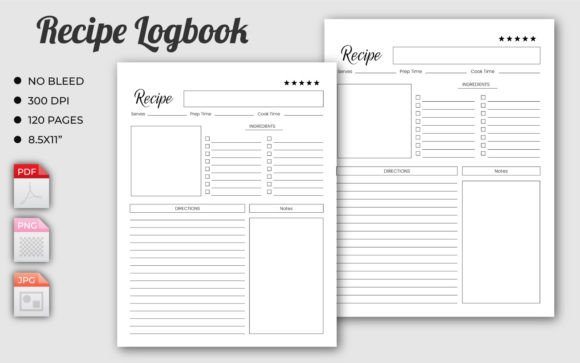
The "no bleed" design specification, meaning the design doesn't extend to the edge of the page, is a practical consideration often overlooked. It ensures that when the journal is printed on any standard home or office printer, the entire content appears cleanly without risk of being cut off. This translates to reliable, hassle-free reproduction for anyone, from an individual nurse buying the PDF to print at home to a hospital's printing department mass-producing copies for an entire department.
The 120-page count isn't just a number; it's a commitment to depth. It allows a user to dedicate the journal to a single, extended project—like tracking the progression of a new clinic protocol over a full quarter—or to use it as a daily companion for an entire semester or rotation. It reduces the anxiety of "running out of space" at a critical moment, providing a sense of continuity and completeness for professional documentation.
A Tool for Reflection and Growth
Nursing is a profession marked by profound human experiences. The Journal for Nurses, through its organized yet flexible format, can also facilitate professional reflection. Nurses can use sections to not only document clinical facts but also to process complex emotional or ethical situations encountered in practice. This private, offline space for contemplation can contribute significantly to resilience, burnout prevention, and ongoing professional growth, making the journal an instrument for both task management and personal sustainability.
Ultimately, the Journal for Nurses meets the professional where they are. It acknowledges the need for structure in a chaotic environment and the need for flexibility within that structure. It provides a tangible, high-quality medium for the critical thinking, planning, and communication that defines nursing excellence. Whether printed, customized, or carried from room to room, it's designed to turn daily challenges into organized, actionable information.