The Chicken Keeping Journal: A Tool for Organized Husbandry
Managing a backyard flock, whether for eggs, enjoyment, or as a small-scale enterprise, involves a surprising amount of data. From the daily egg count to the cost of feed and the subtle signs of a bird’s health, these details are crucial for both the hobbyist’s success and the small business owner’s bottom line. Yet, this information often ends up scattered across notebooks, sticky notes, or memory alone. The Chicken Keeping Journal addresses this need directly. It is a purpose-built digital logbook designed to consolidate and organize the key metrics of poultry care into a single, structured format.
Core Purpose and Practical Design
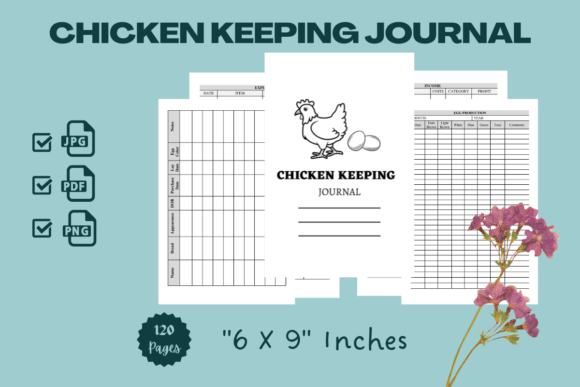
The primary value of this journal lies in its intentional design. It is not a generic notebook but a focused tool with dedicated sections for the most critical areas of flock management. The inclusion of sheets for Monthly Egg Production, Expenses, Income, Chicken Health Issues, Coop Maintenance, and general Comments creates a framework that prompts the keeper to record essential information consistently. This structure transforms casual observation into actionable records.
For instance, tracking egg production month-by-month allows one to identify seasonal patterns, assess the productivity of different hens, and notice declines that may signal health or dietary issues. Similarly, a dedicated expense log helps move beyond vague estimates to precise understanding of feed, bedding, medication, and infrastructure costs. For those selling eggs or chicks, the income sheet provides a clear picture of revenue, enabling a simple profit analysis. This compartmentalization is the journal’s fundamental strength.
Characteristics and Format Flexibility
The journal is offered as a digital product with practical specifications. The 6 x 9 inch dimensions are a common and portable size, comfortable for both printing and on-screen use. The 120-page count provides ample space for long-term record-keeping, potentially covering multiple years for a small flock. Importantly, it is provided in multiple file formats: PDF, JPG, and PNG, with seven different variant designs. This format flexibility is a significant advantage.
The PDF is likely the most functional for most users, suitable for digital filling using annotation tools or for clean, formatted printing. The inclusion of JPG and PNG files, however, offers adaptability. These image files can be imported into other digital platforms or design software, allowing users to integrate pages into custom binders, personal planners, or even as templates within certain apps. The “no bleed” specification indicates it is ready for standard home or office printing without requiring specialized trimming. This multi-format approach accommodates diverse user workflows—from the purely digital note-taker to the individual who prefers a physical binder.
Real-World Application and Usability
In practical use, the effectiveness of the Chicken Keeping Journal hinges on the user’s commitment to regular entry. Its design lowers the barrier to that commitment by making entries straightforward and categorized. A keeper can quickly note a health issue—like “Hen #3, lethargy, inspected feet—no bumblefoot”—in the dedicated section without hunting for space in a general notebook. Over time, this creates a valuable medical history for each bird.
Coop maintenance logs are equally practical. Recording dates of deep cleans, repairs, or predator-proofing upgrades turns ad-hoc tasks into a scheduled maintenance plan, prolonging the lifespan and safety of the infrastructure. The long-term value of such a compiled record is substantial. It can inform future decisions, such as choosing breed for egg-laying consistency based on your own data, or proving expenses for tax purposes if the flock is a business venture. The journal’s consistency in layout also aids in reliability; you know exactly where to find last year’s autumn egg production numbers.
Audience and Situational Benefits
This tool will resonate most with keepers who view their flock through a lens of management and optimization. This includes:
- Serious Hobbyists who want to improve their husbandry, understand their birds’ cycles, and ensure flock health through documented observation.
- Small-Scale Egg Producers or those running a micro-farm, where tracking costs against income is essential for sustainability.
- Educators or community project leaders using poultry keeping as a teaching tool; the journal provides a clear framework for students to learn data recording and animal care.
- New Keepers who feel overwhelmed by the learning curve. The journal acts as a guided system, helping them focus on what parameters matter most.
It may be less critical for someone with a very small, purely ornamental flock where financial and production metrics are not a concern. However, even in those cases, the health and maintenance logs offer undeniable benefits for animal welfare.
Professional Observations on Quality and Limitations
The journal’s presentation, through its variant designs, offers choice but its core quality is defined by its structure and completeness. The inclusion of all major tracking categories suggests thoughtful development based on real keeping experience. A potential limitation is its static nature as a downloadable template. It does not have interactive calculations—totaling monthly expenses or averaging egg counts would require manual effort or external software. For some, this is fine; for others, a spreadsheet might offer more automation.
Its effectiveness also depends on the user’s preferred medium. If you exclusively use mobile devices, filling a PDF may require a compatible app, whereas the image files might be less convenient. For a purely analog user, printing the PDF is straightforward, but the cost and effort of printing 120 pages is a consideration compared to buying a pre-printed physical logbook. The digital format, however, allows for infinite reuse and personal customization, which is a strong point for flexibility.
Integrating into Your Workflow
To assess if the Chicken Keeping Journal fits your needs, consider your current recording habits and goals. If you already manage your flock data effectively in a customized spreadsheet, this journal may not add new functionality. However, if your records are inconsistent or you lack a structure, this journal provides an immediate and professional solution. It can be implemented as a weekly or monthly check-in task. For bloggers or creators sharing their poultry journey, the organized data within the journal can also serve as a rich source of accurate content for posts, videos, or community advice.
Ultimately, the Chicken Keeping Journal is a practical asset for transforming the nuanced task of poultry care from a collection of memories into a database of decisions. It encourages a methodical approach that can lead to healthier birds, more efficient operations, and a deeper understanding of your flock’s dynamics. Its value grows cumulatively, with each filled page adding to a resource that can inform your keeping practice for years to come.